Collaborative Art: The Culture Crossing Borders in Uzbekistan

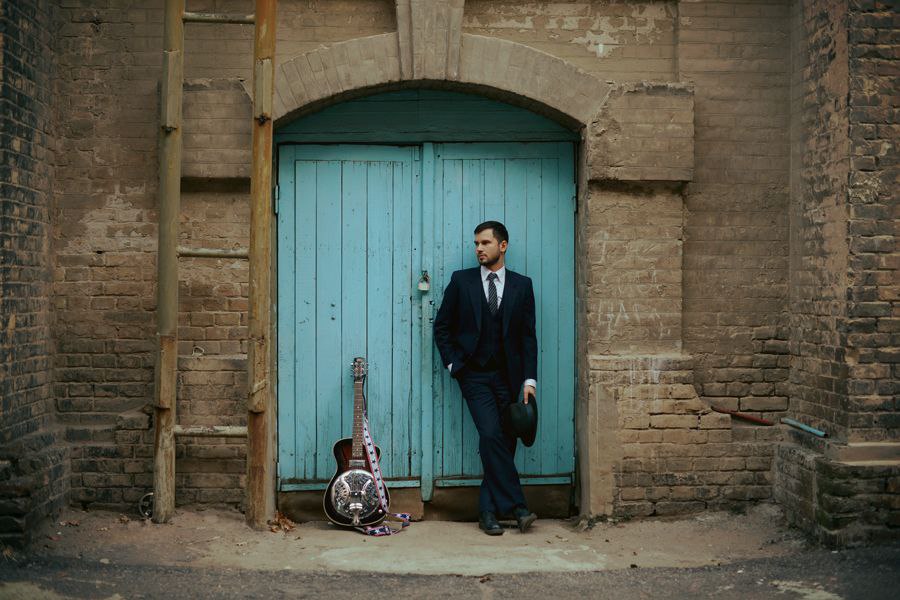
Poet and musician Ashot Danielyan has spent more than two decades bringing people together through art. From underground music scenes in Tashkent to collaborations with cultural practitioners across Europe and Central Asia, he uses creativity to foster dialogue, empathy and social change.
Uzbekistan is your homeland – where did your love of the arts begin there?
I began as a musician, playing in an indie rock band called Origami Wings and organizing rock festivals in Tashkent. At first, culture felt to me separate from everyday life, something people enjoyed in their free time.But over the years, I realized culture is much more powerful than that. It enables people to raise their voices, draw attention to important issues and connect with one another. Once I understood that, my involvement became much deeper.
Through ifa's CrossCulture Programme (CCP), an international fellowship that brings together professionals and volunteers from more than 40 countries, you spent around three months at the Berlin Art Institute. What did that experience give you?
I met artists and curators from different backgrounds and discovered ways of working – both artistic and educational – that were very different from what I knew in Uzbekistan.
And many of the relationships I built there evolved into long-term collaborations and projects. ifa’s Synergy programme, for instance, helps alumni to collaborate with each other, and through that programme, I helped launch a poetry school connecting young poets from Uzbekistan and Kyrgyzstan. It created opportunities for them to learn from one another through workshops, readings and other projects, and to build connections across borders.
Was there something about Berlin that particularly stayed with you?
The spirit of collaboration. I was struck by how naturally artists came together to form communities and work collectively. In Uzbekistan, artistic practice has often been more individual. Artists can feel like they are working alone. Seeing people creating together inspired me. Much of my work today focuses on bringing artists, writers and cultural practitioners together and creating spaces where collaboration can happen. Culture creates connections where politics and history sometimes create distance.
Poetry plays a central role in many of your projects, as both an artistic and social practice. What draws you to it?
I don't think of poetry simply as writing beautiful words and rhythms. For me, it is a way of reconnecting with yourself, discovering your own voice, expressing something genuine. Our poetry schools and workshops bring together young writers from different backgrounds to write, perform and discuss their work. The goal is not only to produce poems but to encourage young people to explore who they are, what they care about and how they want to engage with the world around them.
Environmental issues are also very present in your work…
Because they are impossible to ignore. The environmental challenges facing our region are enormous. Take the tragedy of the Aral Sea. What was once one of the world's largest lakes has largely dried up because of decades of water diversion, and it has caused severe environmental and economic damage across the region. Memory of Water, part of an ifa exhibition, explored the lasting impact of that disaster on communities across the region.
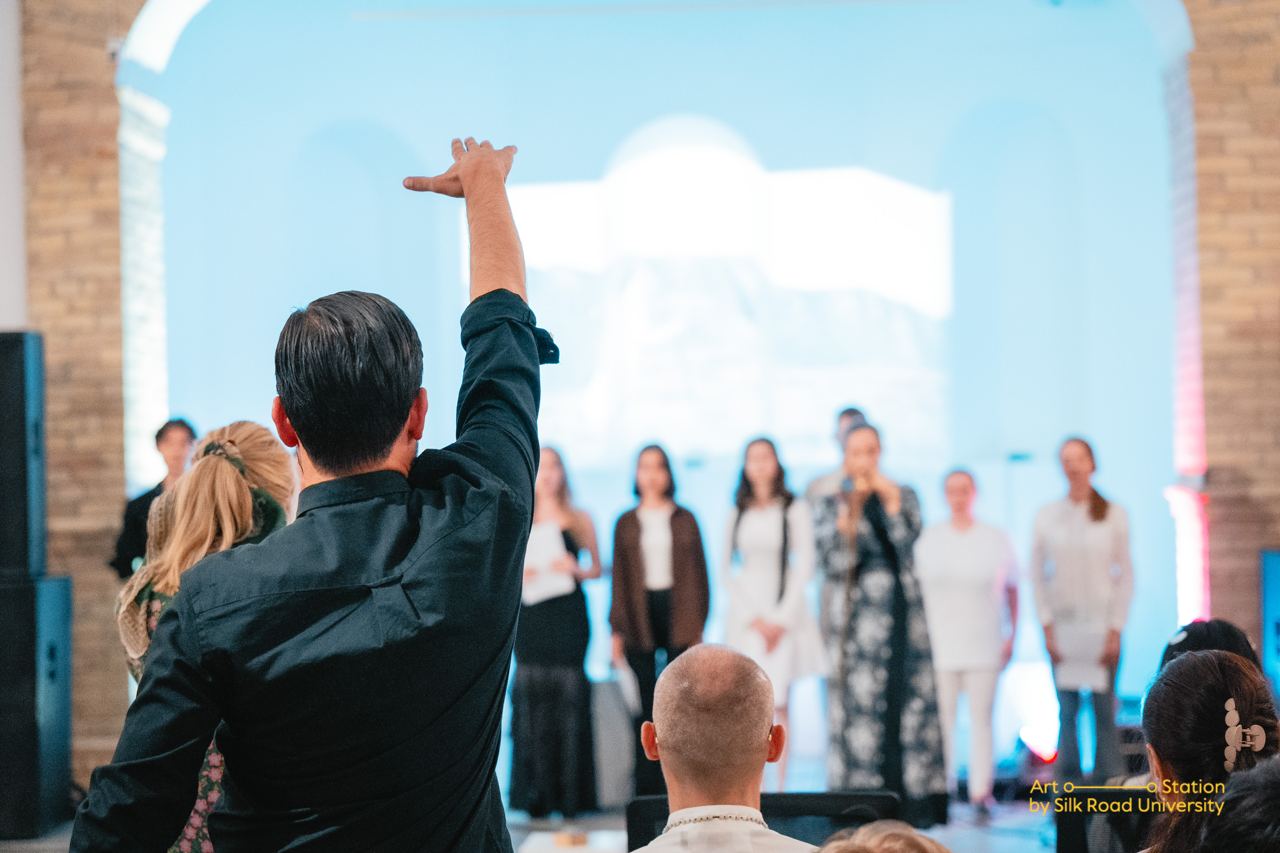
Rapid urban development and tree felling is also putting pressure on green spaces across Uzbekistan, and Voices of the Trees brought together young people, poets, musicians and visual artists in Samarkand to respond creatively to that through performances and an exhibition. Art cannot solve environmental problems on its own, but it can create awareness, encourage reflection and connect people with the conversation.
Contemporary art can sometimes feel inaccessible. How do you introduce it to audiences who may have had little exposure to it?
For many years, contemporary art was not widely understood or visible in Uzbekistan. As a result, people often developed a very narrow idea of what art could be. We try to show that art takes many forms. Just as societies are diverse, art is diverse. When people recognize that, they become more open to different perspectives and ways of thinking.
What challenges do artists in Central Asia face today?
One is that they often address topics that our society still finds uncomfortable to discuss openly – questions of identity, social inequality, environmental degradation or changing cultural values. Another is the lack of infrastructure and support – many artists have to manage every aspect of their work themselves.
What do young creatives need today beyond talent?
Courage, because art requires experimentation. Every new generation of artists challenges existing ideas and introduces new forms of expression.Empathy is equally important. Artists need to understand people, listen to different experiences and stay connected to what is happening in society.
Looking back on your career, what changes make you optimistic?
Fifteen years ago, many opportunities that now seem normal felt impossible for an artist in Uzbekistan: international exchanges, fellowships and cultural collaborations were much harder to access.Today there is far more freedom to connect, travel and collaborate. People are often afraid of what they do not know.When we meet people from different backgrounds, we begin to understand them and see that differences are not something to fear.
This article is based on information available to the author at the time of writing. In some contexts, independent verification of all information may be limited by access restrictions, reporting conditions, or the availability of sources.
SHARE is an ifa platform for voices and perspectives from different countries and contexts. All articles are written by alumni of ifa programmes. The views expressed are those of the author and do not necessarily reflect the views of ifa.
Learn more about our Editorial Values & Standards.