

In a League of Her Own
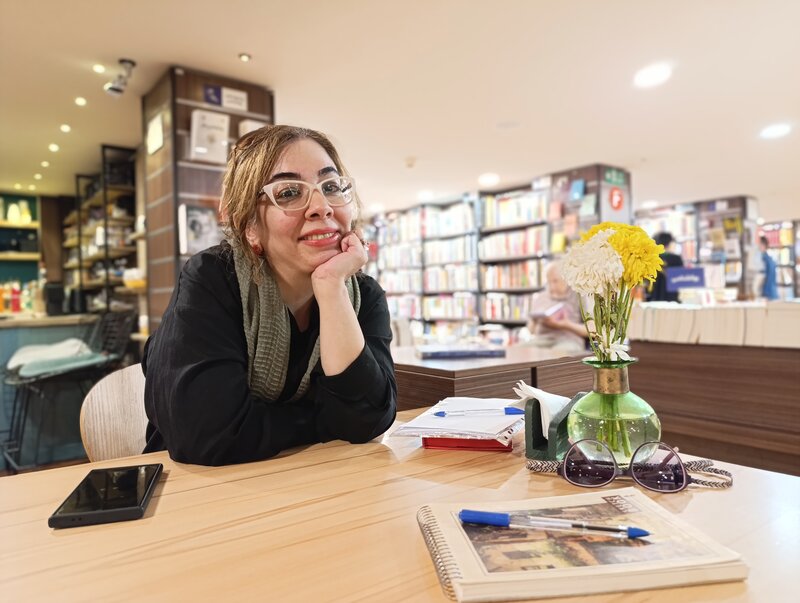
The job of football writer has long been a male preserve, so imagine how hard it was for Afsoon Hazrati to break into Iran’s tight-knit league. Ghamar Takavaran met her.
Lying in the back of the car, covered by old newspapers, Afsoon Hazrati managed to sneak past the guards and into Tehran’s Azadi stadium to attend the Esteghlal football team's training session. All she wanted to do was write a newspaper report, but at that time, in 2001, women were not allowed to enter stadiums in Iran.
In Iran, the presence of women in sports journalism has become normal now, but Hazrati pointed the way. She is known as the first female sports journalist in Iran. Hazrati, whose dark eyes shine behind white-framed glasses, has loved sport since she was child, but her school did not have a physical education teacher. Instead, she asked her classmates to play football, using a basketball they had. “It was a huge crime in the eyes of the headmaster,” she says. Because they were girls, society did not consider exercise, especially football, to be a good thing for them.
She loved sport so much she started writing about football. One of her professors, Dr. Boroujerdi, who taught political science at the university, had encouraged her to write and, in 1998, helped her get a break with the Esteghlal Javan newspaper. However when a new manager took charge of the newspaper, she became a scapegoat. She was often blamed for things, she says, such as when the newspaper design was overhauled, and lots of papers returned unsold: "My manager said it was because I didn't write well.”
She was always the only woman in male groups, which made her reluctant to ask questions at press conferences. “I thought if I spoke, they might make fun of me, and so I was embarrassed,” she says. She made a point of apologising for things that weren't her fault. Her articles were often published in hidden corners of the paper. “For years, I was paid very little,” she says. “I was treated with a lot of disrespect.”
Then there was the public, and the ban on women entering stadiums. “I went through persistence,” she says. “I attended Esteghlal team training sessions, conducted interviews with the coach and players, and wrote training reports,” she says.
In 2002, she moved to the Etemad newspaper, where her career blossomed. She received training and encouragement, and requests to write started coming in from other outlets. “Working at Etemad newspaper was a turning point for me,” she says. “Mr Ebrahim Afshar, who was the sport service editor there, helped me a lot.”
When she gained official access to her first football league game as a reporter at Takhti Stadium in 2002, she was the only woman present. Iranian women were not allowed to attend football matches as fans until October 2019. However, Afsoon Hazrati was breaking down barriers. Ferdos Sheikholeslam is a feminist social researcher in Tehran, and when she speaks to me about Hazrati, she does so with great admiration.
She covered football, which is still a very male-dominated field, let alone twenty or thirty years ago. Hazrati tried very hard to be taken seriously in this space, paving the way for others.
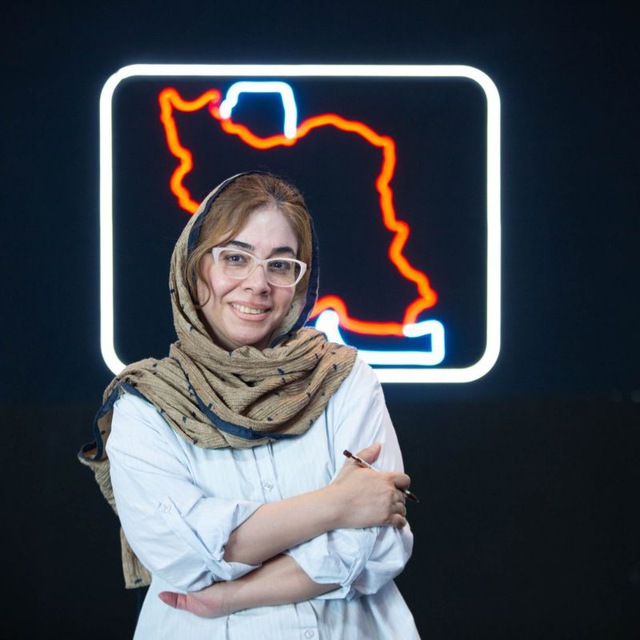
Even as success came, her troubles continued. In 2010 the Sports Writers Association was formed and Hazrati was given a position on the Football Writers’ Committee. “When they signed a piece of paper, they passed it by me and I had to say, ‘I’m here too’,” she remembers. “They said we thought you were a secretary. They repeated this every session. They deliberately tried to ignore me.”
Nonetheless, she worked her way up to the National Olympic Committee, attending the Asian Cup and the Women's World Cup in France. Unfortunately, it was at her own expense. “Men went on similar trips to the Olympics and elsewhere for free,” she says. “And they made many mistakes.”
Now she has received several international awards, one for a 2020 report about Iranian women spectators in stadiums, another in 2023 about a match in Mashhad where tickets were available to both genders, but arriving women were attacked with pepper spray.
The number of women working as sports journalists in Iran has now surpassed 50. Hazrati wants to make clear that she is not actually the first woman to write about sports after the Islamic Revolution. Mahin Gorji, an athlete, entered the field four years before her, but soon moved into broader news reporting.
Hazrati has now been writing about sports for 27 years. "I thank myself for not giving up,” she says. "Now I have more courage,” she continues. “I'm everyone's advocate, defending not only my own rights, but also those of strangers. Of course, they still call us third-rate. In response, I say, ‘What exactly do men write that makes you call us third-rate? Let's face it, we women write much better’.”
This article is based on information available to the author at the time of writing. In some contexts, independent verification of all information may be limited by access restrictions, reporting conditions, or the availability of sources.
SHARE is an ifa platform for voices and perspectives from different countries and contexts. All articles are written by alumni of ifa programmes. The views expressed are those of the author and do not necessarily reflect the views of ifa.
Learn more about our Editorial Values & Standards.
The Author

More articles of the Author