
The Ethiopian Nurse Campaigning to End the Generational Cycle of Sexual Abuse
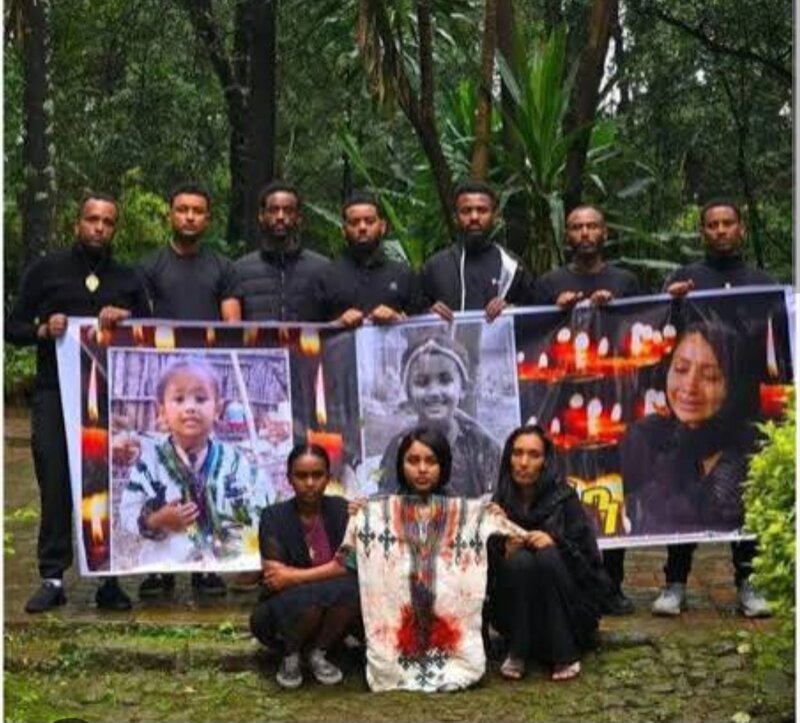
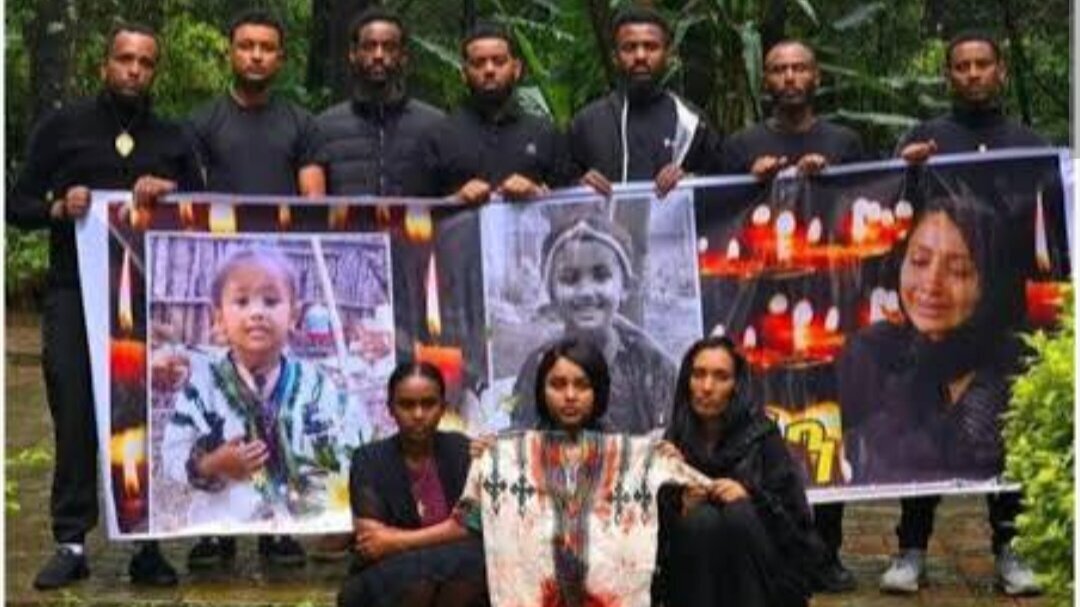 Supporters protest against the reduced sentence given to Heaven’s murderer on appeal. © Abekeslesh
 Abekelesh and her daughter Heaven © Abekeslesh
 Abekelesh and her daughter Heaven © Abekeslesh
- Abekelesh and her daughter Heaven © Abekeslesh
A mother who lost her seven-year-old daughter to sexual violence in an act that echoed the trauma of her own childhood is fighting back.
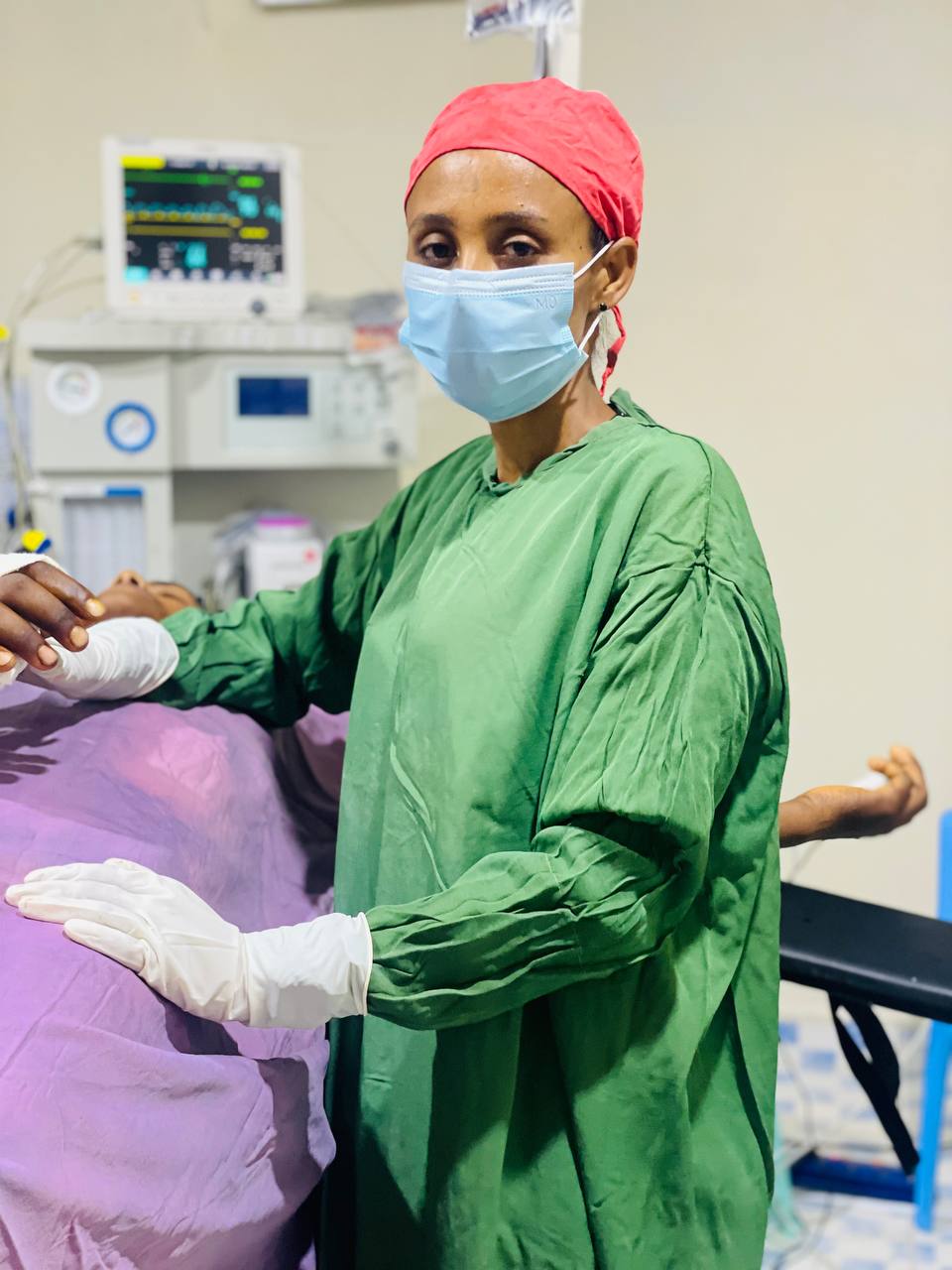
On a gloomy, rain-soaked Monday morning in July 2023, the Ethiopian village of Kotetina was drenched in thick mud. Despite the weather, farmers trudged to their fields as usual and herders led cattle through wet pastures. In her tiny home, Nurse Abekelesh, a single mother, woke up late after working a night shift. She hurriedly kissed her two young daughters, seven-year-old Heaven and three-year-old Makiba, and rushed out to return to work.
Upon arrival at the hospital an hour later, she joined the surgical team as a scrub nurse. As the operation began, her phone—accidentally left on loud—began ringing so insistently that the doctor gave her permission to answer. The caller gave her the most unbearable news of her life. Shortly after Abekelesh had left home, her daughter Heaven had been killed—taken by a violent act the moment her back was turned.
That morning, her daughters had stayed home with Abekelesh’s younger sister, a 16-year-old student who was on winter break. While playing, Heaven stepped out to use the shared toilet. A short time later she was found lifeless outside.
An investigation quickly revealed that Abekelesh’s landlord, Getinet Baye, had sexually assaulted and killed Heaven, then thrown her body outside, pretending she had fallen. Police found blood in his room along with Heaven’s underwear and one of her shoes. The medical report revealed clear signs of rape.
For Abekelesh, the devastation of her daughter’s rape and murder was made even worse by the fact that history had repeated itself. “I was a victim of sexual abuse and it stole my childhood,” she says. “My whole purpose in life after I had my daughters was to make sure they never suffered in the same way.” The nurse’s realisation that she was unable to protect Heaven has prompted her to speak out about the cycle of violence that affects generations of women and girls in Ethiopia and campaign for serious measures to prevent it.
The problem is pervasive and often undocumented. A study published in BMC Public Health found that more than one in three schoolgirls, or almost 40 per cent, experience sexual abuse but only 10 per cent of all cases are ever reported. According to the 2016 Ethiopian Demographic and Health Survey, 23% of women aged 15 to 49 have experienced physical or sexual violence. A weak justice system, a lack of political will and the absence of consequences for perpetrators all help to perpetuate the cycle. Continued political instability makes it even worse. In the Tigray region alone, the UN Human Rights Council documented over 10,000 cases of conflict-related sexual violence between 2020 and 2023.
Born and raised in a rural village in West Gondar, Abekelesh’s early life was difficult. Her stepfather refused to send her to school and put her to work herding cattle. This was when she first experienced sexual abuse. “I was often alone in the fields and boys from my village would chase me into the bush to assault me,” she recalls.
Hoping for an education, she was sent to live with relatives who promised to support her studies. Instead, like many girls in rural Ethiopia, she was forced into a child marriage at the age of 10 to a much older man. She was expected to sleep with him as soon as she hit puberty. “Marrying me off was a way of shifting the burden of raising and educating me, but I was too young to be a wife.”
Abekelesh eventually managed to escape the marriage. She moved to the city, where she studied nursing and earned a degree in accounting. While attending college, she married the father of her two daughters. Life began to feel more stable—until the outbreak of conflict between the Ethiopian federal government and the Tigray region. According to the Ethiopian Human Rights Commission, between 80,000 and 100,000 people died. Her husband left to return to Tigray to avoid being killed, leaving Abekelesh alone to raise their children.
Despite working 16-hour days, she couldn’t afford decent housing. She rented a shared, low-cost home in the compound of her landlord, Getinet Baye, whose wife was a distant relative. “I believed it was a safe space for my daughters,” she says.
I never imagined that it would become the site of another atrocity, with the cycle of sexual violence repeated against my own child.

The political chaos and a justice system which lacks accountability and enforcement have made the government response to gender-based violence a very low priority. Despite clear evidence of his guilt, Heaven’s murderer was released from prison just three days after the killing. He was set free along with other prisoners due to fighting in the region. Key evidence was also improperly handled by the police and Heaven was buried before a full autopsy could be completed. Getinet was re-arrested a month later and initially sentenced to 25 years in prison. He successfully appealed and the sentence was reduced to 21 years.
Outraged by the lower sentence, Abekelesh went to the media to speak out about her daughter’s case. Thousands of Ethiopians, angered by the court’s decision to downgrade the crime, joined the social media campaign “Justice for Heaven”. More than 300,000 people signed a petition demanding a higher sentence. Abekelesh says her decision to fight has only increased the threats against her from those who believe women should stay quiet about such matters.
“Speaking about human rights violations in Ethiopia comes at a high cost,” says Haimanot Ashenafi, a regional researcher at Amnesty International. “There is no freedom of expression and human rights defenders are often detained, harassed and forced to flee the country.” Gender-based violence is a serious and multi-layered problem which needs to be addressed urgently, adds Haimanot. “Survivors remain unprotected and neglected by key stakeholders and these failures—along with other contributing factors—perpetuate the cycle of abuse."
While Abekelesh is determined to continue her campaign, the repeated trauma leaves her in constant fear. “Many times I’ve wished I didn’t have to live,” she says. “But I have to carry on for my remaining daughter, Makiba. I can’t feel safe until she’s home from school. Even inside our home, I don’t feel she’s truly safe.”