A Case of Femicide in Rural Mexico Defeats Impossible Odds
In Mexico, the story of a Wixárika woman’s long fight for justice for her murdered sister reveals the double discrimination faced by indigenous victims of gender-based violence.
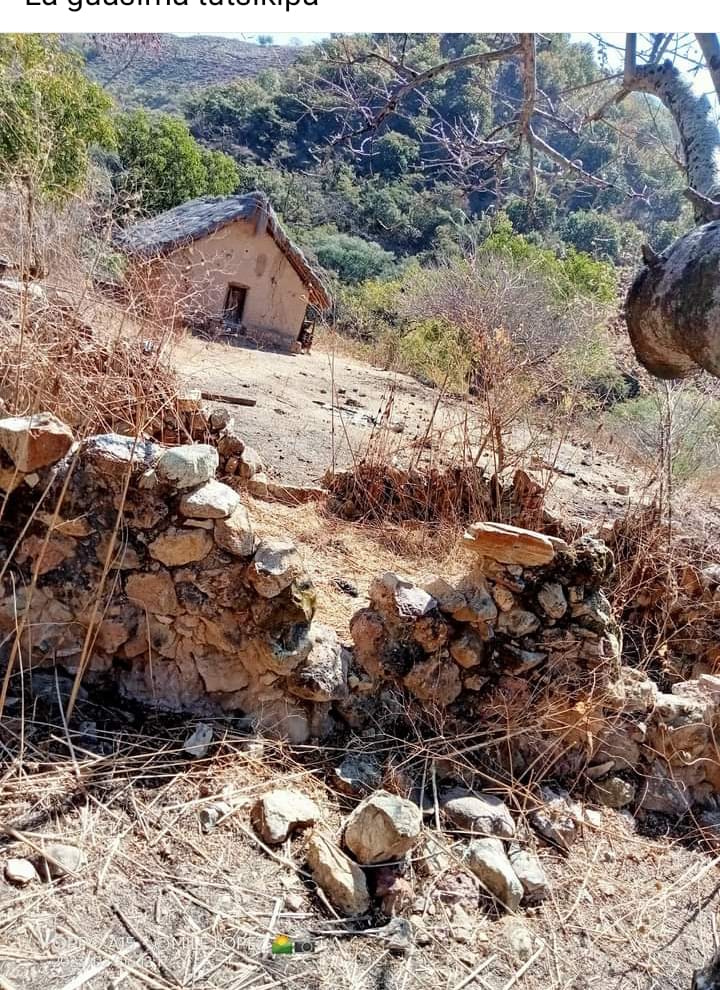
When Marcela Carrillo heard about her sister Liliana’s death she knew it was suspicious. Liliana’s husband told Marcela that her sister had committed suicide and sent her a photo to prove it. Liliana's lifeless body was hanging from a peach tree in the town of Mezquitic, Mexico. A long blue skirt, typical of the Wixárika women, covered her down to her feet. But Marcela was certain that 20-year-old Liliana had not hanged herself. “My sister would never do that,” she says. “She had plans to make a better life for herself and her daughter.”
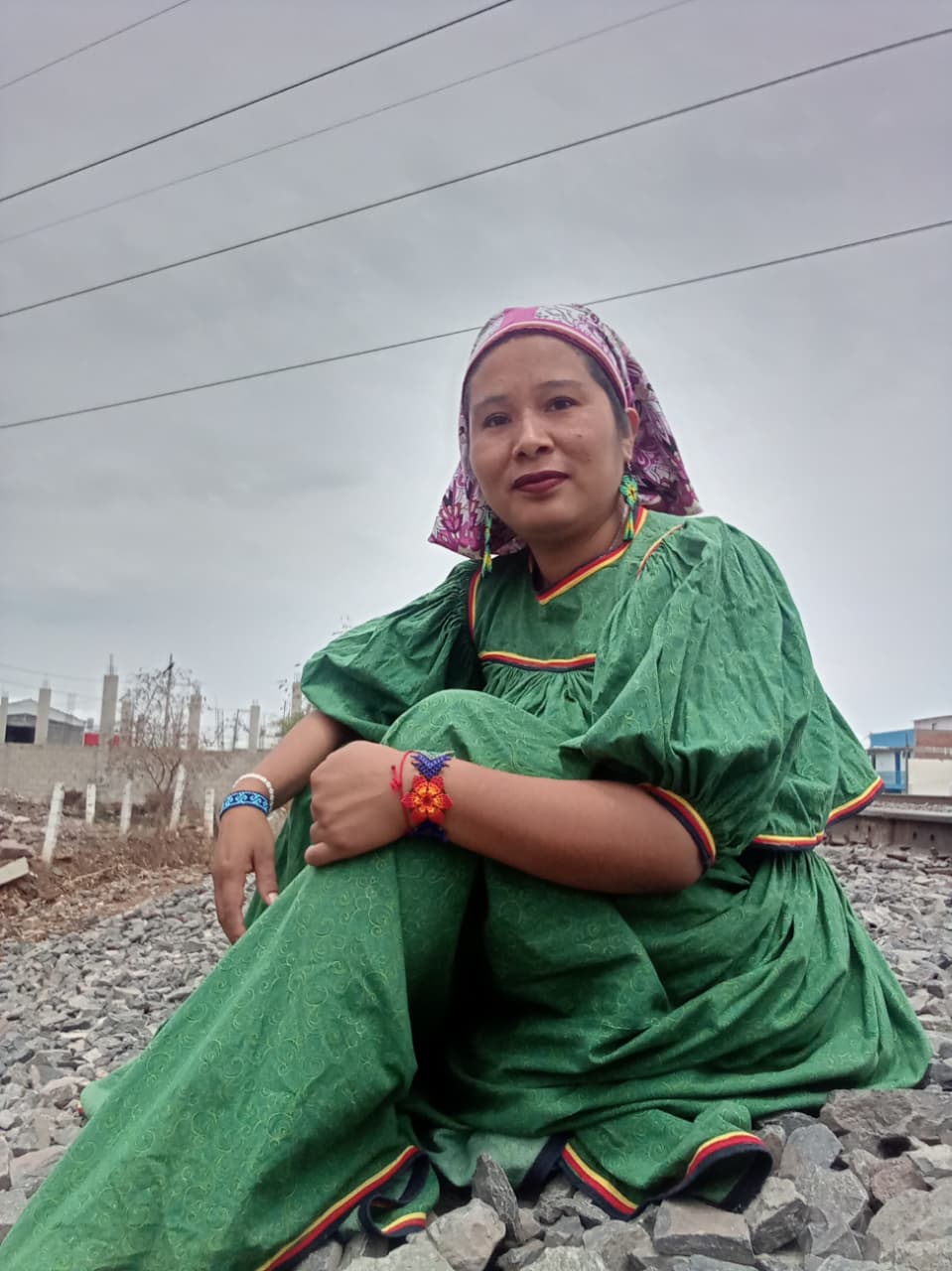
Marcela, 36, believed her sister’s abusive husband, Gelacio, had killed her. She was determined to seek justice, but she was not prepared for how the battle would almost ruin her own life. The crime took place in March 2020 and over the five years since she has faced racial prejudice from the state justice system and ostracism from her own Wixárika community. At one point, she lost her livelihood selling handicrafts and spent all her savings. Yet Marcela refused to give up. After finally securing her brother-in-law’s conviction, she now works at the Women's Justice Centre (WJC) in Colotlán, Jalisco, to support other abused indigenous women.
Marcela’s struggle highlights the double discrimination indigenous women suffer in matters of gender-based violence and justice. Mexico has one of the world’s worst rates of femicide, with an average of 10 women murdered by violent men every day. Due to factors such as poverty and geographic location, the crime affects a disproportionate number of indigenous women. In addition, while conviction rates for femicide remain pitifully low across the country – less than one per cent of perpetrators are prosecuted and sent to jail, according to a 2025 investigation by the Institute for War and Peace Reporting (IWPR) – access to justice is even harder for ethnic minority women. Racial prejudice, language barriers, the separation of state and indigenous laws, and lack of resources in remote areas present almost insurmountable challenges.
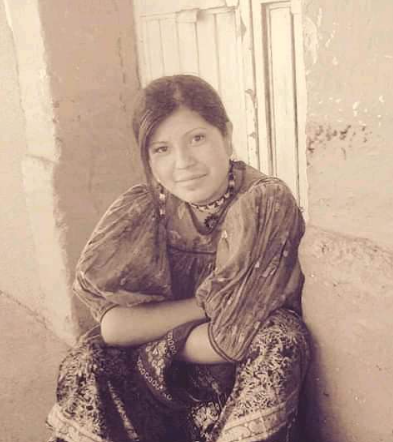
Marcela and her sister grew up as members of Mexico’s Wixárika people, an ethnic minority of around 48,000 who make up 80% of those living in extreme poverty in the mountainous Sierra Madre Occidental region. The name Wixárika means “people with a deep heart” and the community is known for its spiritual connection to nature. Each community which makes up the Wixárika people has its own authority, language and laws. According to Mexico’s constitution, indigenous people have the right to self-determination, which entails the freedom to resolve any conflict or crime within their communities.
Since 2018, the indigenous municipality of Mezquitic, where Liliana lived, was marked with a ‘Gender Violence Alert’, a national mechanism designed to combat high levels of violence against women in specific regions. When Liliana died, however, the Wixárika authority in her area accepted her husband’s version of events. “They told me to let it go,” says Marcela. “They said they believed Liliana had killed herself. I knew this was untrue but they did not want to listen to me.” Left with no choice, Marcela defied traditional law and reported Liliana’s femicide to the state police. The move was swiftly met with a backlash from her community, who shunned the whole family.
I know we broke the rules but there was no other way to seek justice, says Marcela. Sadly, to our people we were traitors.
Reporting the killing to the state also involved a whole new set of problems. “They disrespected us from the start, calling us liars and mocking us,” says Marcela. “The pathologist told us that the cause of death was suicide, but we later found out an autopsy was never performed.” The authorities did not provide Wixárika interpreters. “They spoke to us in Spanish and my mother cried because she couldn’t understand anything,” says Marcela.
Such treatment is common, according to the Interamerican Commission of Human Rights. As well as racial prejudice and language barriers, issues such as lack of information, financial hardship and rural locations hugely disadvantage indigenous women. Many must travel long distances to report violence and often have to rely on their husbands for access to money since such women are 30% less economically active than men.
Marcela quickly found herself in financial difficulty as she pursued the case. Her family lives nine hours away from the courts and travelling to the trial was complicated and expensive. Marcela and her husband earned a modest living selling handicrafts in the city centre but Liliana’s femicide happened during the Covid-19 lockdown and their earnings stopped during those months. “In a short time, all my savings vanished. I felt like everything was falling apart,” she says.
“As soon as I became involved in the trial, I realised that all the bad practices within the system and the lack of knowledge about how to act in cases of indigenous people were present,” says Leticia Morales, a Wixárika interpreter later assigned to the case. “I thought Marcela was so brave because she had to overcome all the enormous obstacles by herself. She did not give up.”
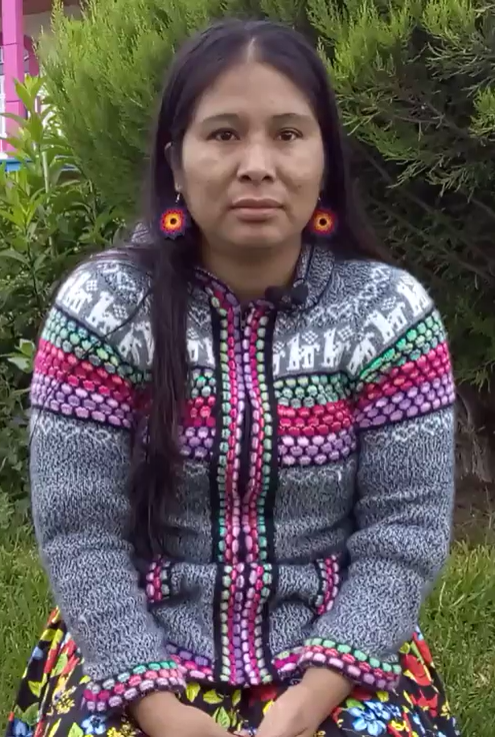
Marcela’s perseverance paid off. After the case went nowhere, she filed a discrimination complaint in 2020 with the state’s Human Rights Commission. The Commission ordered the prosecutor to reopen the investigation, this time respecting the family’s cultural and linguistic rights. Once the death was properly investigated, everything Marcela believed was confirmed: Liliana's husband, Gelacio, had killed Liliana and faked the suicide. He was sentenced to 70 years in prison.
In addition, Marcela was awarded three million pesos (140,000 euros) in damages for her financial and psychological suffering. The Commission also ordered the construction of a memorial to Liliana at the Women's Justice Centre (WJC) in Colotlán, Jalisco, an institution which opened shortly before the trial ended as part of initiatives set in motion by the Gender Violence Alert.
Although Marcela has not yet received her compensation from the state, nor has the memorial to Liliana been built, she is slowly getting her life back on track. She now works at the WJC to advise and support Wixárika and other indigenous women who have been victims of gender-based violence. “I wanted to work here because the fight for Liliana has enabled me to understand the racial discrimination and other problems which indigenous women face during the criminal justice process,” she says. “Nobody should have to go through what I experienced to get justice.”
“Liliana’s death felt like a piece of flesh was ripped from me. Nothing can repair that. But after everything we went through, I finally feel like I can let Liliana go.”